




Commercial Cooling Systems in the Riverina: What Should Business Operators in the Riverina Consider Before Specifying or Replacing?

2Views
There are several factors coming together to create a unique scenario for many Riverina business operators at this particular time: ageing cooling infrastructure, rising power costs, and changing building codes. The trigger point could be reaching the end of the life span of the current system, embarking on a construction project, or simply taking a good hard look at an unexpectedly high energy bill. There is a lot more to consider in terms of commercial cooling than a quote alone will provide. Learning what makes a commercial system correctly specified is the best preparation an operator can make in the Riverina.
Commercial Systems Belong To a Separate Class Altogether
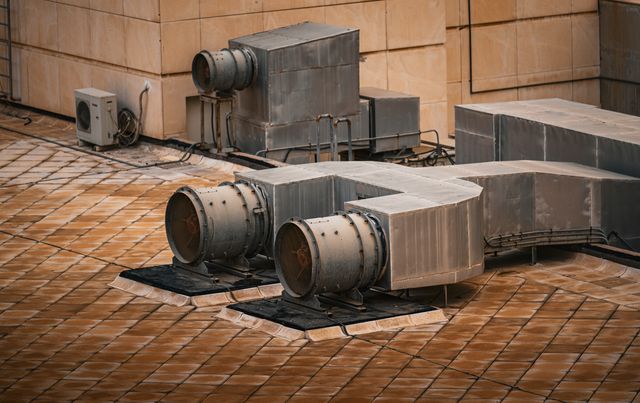
The comparison of commercial systems and residential split systems is one that tends to confuse many businessmen who are dealing with this decision for the very first time. The reason behind the confusion is that commercial cooling systems Riverina are designed for constant operation throughout a longer period during the day. They have to deal with heavier occupancy levels, larger internal gains from the equipment used inside the premises, and air quality issues that residential systems are not designed to handle.
As per the Department of Climate Change, Energy, the Environment and Water, up to 50% of the energy used in commercial buildings in Australia is used by HVAC systems. If the system is properly designed, it meets that figure easily. However, an improperly designed system will consume more energy but will still not provide adequate temperature control, and the installer with residential experience will lack the load calculation skills needed for proper design.
Ventilation Forms Part of the Cooling Process and Is Not a Standalone Issue
Perhaps one of the most common mistakes made in commercial cooling projects is the misconception that ventilation is a standalone issue rather than part of the design process. A properly cooled building that lacks proper ventilation will be stuffy, full of contaminants and unable to supply sufficient fresh air as per the requirements of the National Construction Code. Occupants feel uncomfortable regardless of what the thermostat reads, which often leads to temperature complaints that are actually ventilation problems being misdiagnosed.
Commercial kitchens, factory floors, and retail environments generate heat, humidity, and contaminants that the ventilation system must remove continuously. The ventilation and cooling loads interact directly, and designing those two systems without coordination produces a combined result that neither contractor intended and neither can easily fix once the installation is complete.
Evaporative Versus Refrigerated: The Riverina-Specific Consideration
The evaporative cooling technology works by drawing the hot air from the exterior through pads soaked with water and providing cooled air inside the structure. This is an efficient and cost-effective way in a dry climate. However, the seasonal changes in the amount of moisture in the air influence the performance of an evaporative system substantially. During dry days, evaporative cooling works as expected. On days with a high level of moisture in the atmosphere due to storms, the system fails in its operation as the outside air does not absorb additional moisture, making the indoor temperature higher than expected.
Refrigerated systems provide consistent performance, being immune to the amount of moisture in the air. The only acceptable technology in this case is refrigerated cooling for those who are in need of consistent temperature control, such as in food service operations, hospitality venues and cold storage. Hybrid solutions are also available for the cooling of various areas in large buildings.
Insulation: The Detail That Determines Whether a System Delivers What It Promises
The insulation of pipes and ducts does not usually draw the attention of customers during the specification procedure while being a crucial element in the performance of the installed system. The refrigerant line insulation prevents heat absorption while travelling along the pipe between the mechanical unit and the conditioned area. Without insulation, the refrigerant absorbs heat, thus reducing the effectiveness of the air conditioning system. The ductwork insulation in the ceiling spaces with high temperatures in summertime is aimed at preventing heat absorption as well.
The system working below the specifications after the installation is likely to be faced with the problems caused by the lack of insulation and not the faulty equipment, which is easily preventable through the adequate treatment of the insulation in the designing phase.
Local Servicing Relationships Determine Long-Term Outcomes
Geography of the region determines the realities of servicing, which businesses in the metropolitan area do not experience. The failure of the commercial cooling system during the summer operation period cannot be delayed while waiting for the contractor coming from Sydney. Failure in cooling brings immediate negative effects to the perishable stock, hospitality services and food manufacturing process. Local contractors with established relationships with regional businesses, carrying spare parts and capable of performing emergency procedures in hours rather than days are not merely an advantage for Riverina businesses.
Tags:KS


Buying a Home in the Albury-Wodonga Region: What the Lending Process Actually Looks Like for First-Time Buyers?


New home loans for first-time buyers surged by 6.8% in the December quarter of 2025 to a total of 31,783...


What Does an Experienced High School Tutor in Melbourne Actually Do Differently?
Most parents out hunting for tutoring support tend to assume the best tutor is simply the one who achieved the...


What Separates a High-Accuracy Number Plate Recognition Camera from One That Almost Works?
Two cameras, same entry lane, same lighting conditions, with very different results. One high-accuracy number plate recognition cameras manages to...


Making kids Toy Shopping Easier with Flexible Payment Options
Toy shopping can feel like navigating a maze. With endless aisles filled with colorful boxes and flashy packaging, it’s easy...