





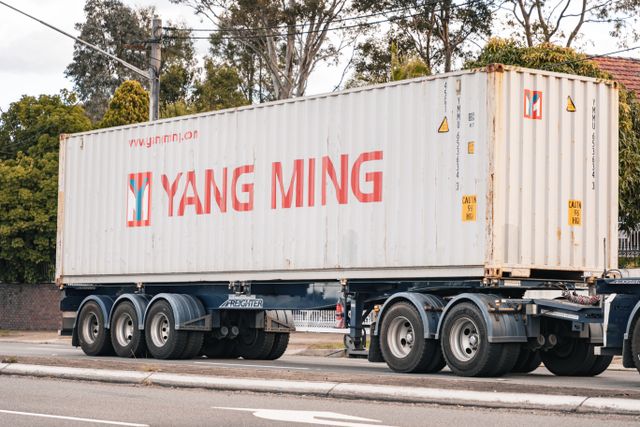
No one who has compared freight rates within Australia will be unfamiliar with the experience. The two providers give identical lanes, sometimes even identical origins and destinations, and the rates are completely out of sync; one is considerably cheaper than the other. There is no denying the urge. What many companies realise once they pick the cheaper rate is that their comparison is really not a comparison at all.
An interstate freight quote is an expression of assumptions about the service. It is indicative of what kind of freight profile is involved, which carrier will do the transport, and the corresponding level of service that rate is good for.
Why Two Quotes for the Same Lane Diverge?
Freight pricing in Australia is driven by several variables that are not always visible in a quote comparison. Weight and volume are obvious inputs. Less obvious is freight density, the ratio between a consignment’s weight and its cubic measurement, which determines how carriers allocate space and set pricing on consolidation runs. A light but bulky pallet is priced differently from a dense, compact one, even at identical weight.
Origin and destination specifics also reshape a quote significantly. Depot-to-depot freight on a major interstate lane is structurally cheaper than a tail-lift delivery to a residential property or a small-format retail site in a regional town. Providers do not always make these distinctions explicit in their initial quote, which is how the comparison exercise produces misleading results.
What the Quote Doesn’t Show?
Carrier quality is invisible in a quote comparison. A provider that routes freight through multiple handling points to achieve a lower cost per kilogram is transferring risk to the shipper. Each additional touch point introduces the possibility of damage, delay or mislabelling. A quote that relies on that kind of consolidation can look attractive at the booking stage and expensive at the claims stage.
The difference between a freight broker that aggregates carrier capacity and a logistics provider with established carrier relationships is also invisible in a quote. The broker passes cost savings to the client but retains no operational accountability when a carrier fails. The provider with direct carrier relationships can intervene when something goes wrong because it has the relationship leverage to do so.
Transit Time and the Commitment Behind the Number
Transit times are consistently misunderstood as being guarantees. Carriers provide standard transit times based on their average performance on particular lanes. Such transit times stretch out during peak periods, when congestion in the carrier network arising from the record freight volumes in Australia affects the average transit time performance. Road freight in NSW in 2024-25 was recorded at 87.6 billion tonne kilometres, which constitutes a national record. In congested lanes such as Sydney to Melbourne, the ability of the provider to sustain reliable transit times will solely depend on the network depth of carriers, not on its quoted transit times.
Another aspect of commitment is that of same-day pick-up, which is not usually covered by most quote forms. This can only be done by a provider with a local carrier network with the ability of doing same day collection.
Reading a Quote as a Service Document
The best way a business can make use of its freight quote is to use it as the start of a discussion rather than the end of one. Questions on the carrier used, whether the shipment will be point-to-point or cross-docked, and how the company plans to handle late deliveries provide more information on service quality than the actual cost of transportation ever will.
An interstate freight quote is merely the start of the process, not the end. Companies that bypass the discussion and simply book based on price will pay the price in terms of higher re-delivery costs, damages to inventory, and lost customers. The companies that deserve selection are those who welcome such questions.
Tags:KS


Understanding Specialist Physiotherapy for Movement Problems


Movement is an essential part of our daily lives. Whether it’s a simple stroll in the park or participating in...


Commercial Cooling Systems in the Riverina: What Should Business Operators in the Riverina Consider Before Specifying or Replacing?
There are several factors coming together to create a unique scenario for many Riverina business operators at this particular time:...


Buying a Home in the Albury-Wodonga Region: What the Lending Process Actually Looks Like for First-Time Buyers?
New home loans for first-time buyers surged by 6.8% in the December quarter of 2025 to a total of 31,783...


What Does an Experienced High School Tutor in Melbourne Actually Do Differently?
Most parents out hunting for tutoring support tend to assume the best tutor is simply the one who achieved the...